 Cristian Ruiz V.
English Teacher
Cristian Ruiz V.
English Teacher
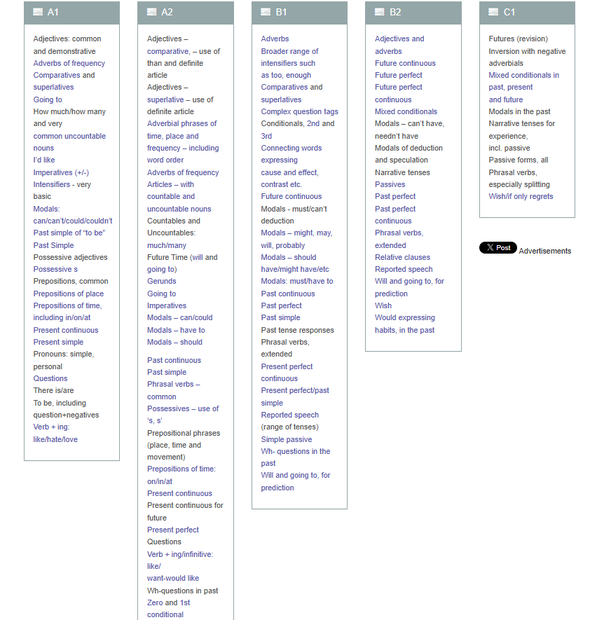
Table of grammar contents - all levels
Grammar to study at each CEF level
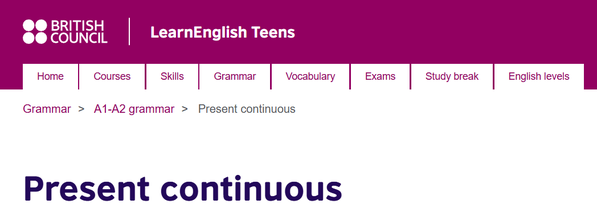
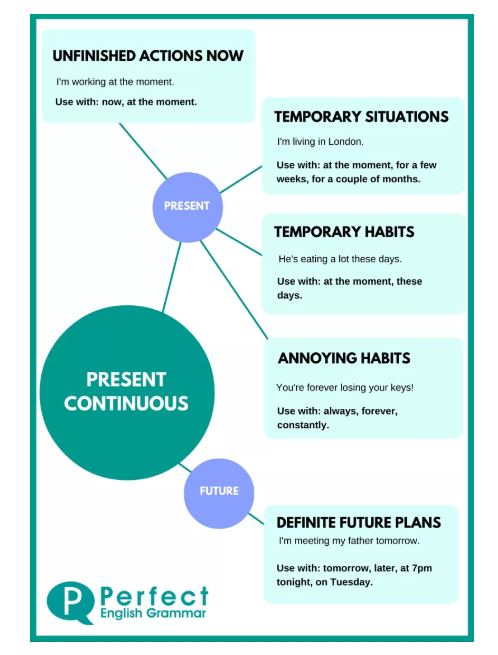
Present continuous

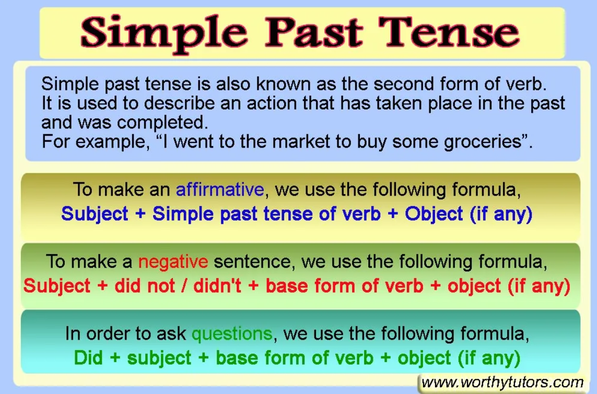
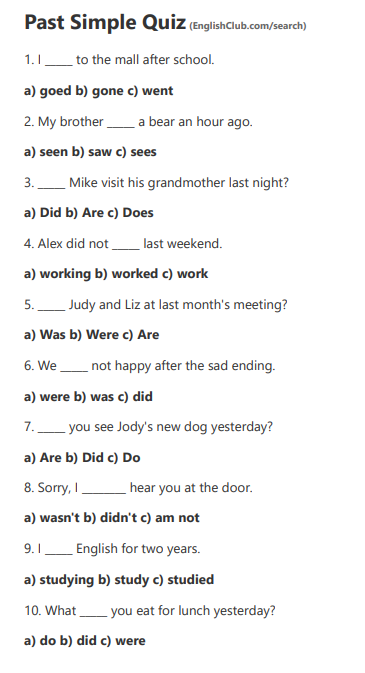
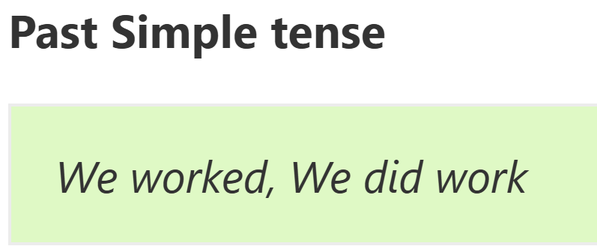
Past simple
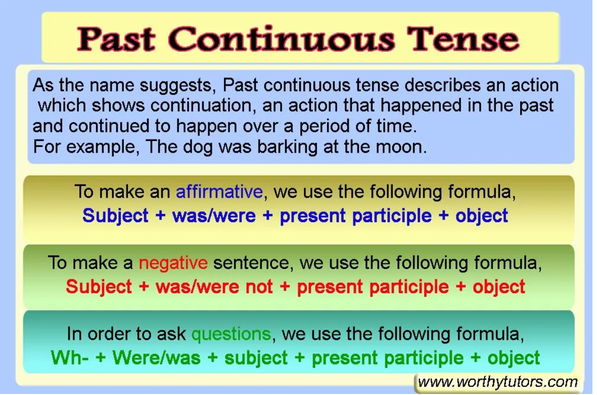
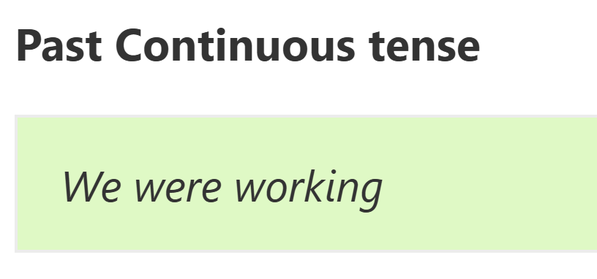
Past Continuous
Past Simple vs Past Continous Exercise
Exercise 1
Exercise 2
Exercise 3
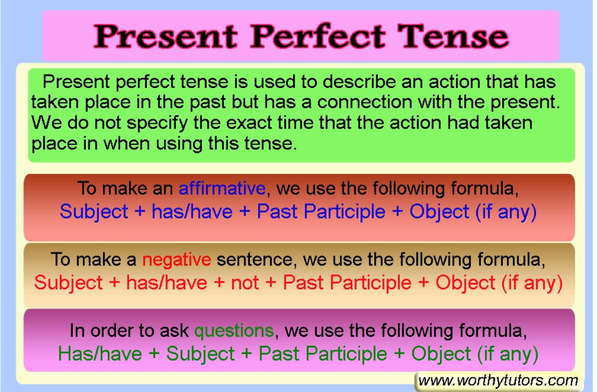
Present Perfect
THE PRESENT PERFECT SIMPLE TENSE
Test
Write the participle form of the following verbs.
- go →
- sing →
- be →
- buy →
- do →
Complete the table in present perfect simple.
| positive | negative | question |
|---|---|---|
| He has written a letter. | ||
| They have not stopped. | ||
| Have we danced? | ||
| She has worked. | ||
| Andy has not slept. |
Write sentences in present perfect simple.
- they / ask / a question -
- he / speak / English -
- I / be / in my room -
- we / not / wash / the car -
- Annie / not / forget / her homework -
Write questions in present perfect simple.
- they / finish / their homework -
- Sue / kiss / Ben -
- the waiter / bring / the tea -
- Marilyn / pay / the bill -
- you / ever / write / a poem -
Ask for the information in the bold part of the sentence.
- They have talked about art at school. -
- Jane has got a letter. -
- Oliver has cooked dinner. -
- Caron has read seven pages. -
- You have heard the song 100 times. -
Source: https://www.ego4u.com/en/cram-up/tests/present-perfect-simple-1#google_vignette

How to use the Present Perfect
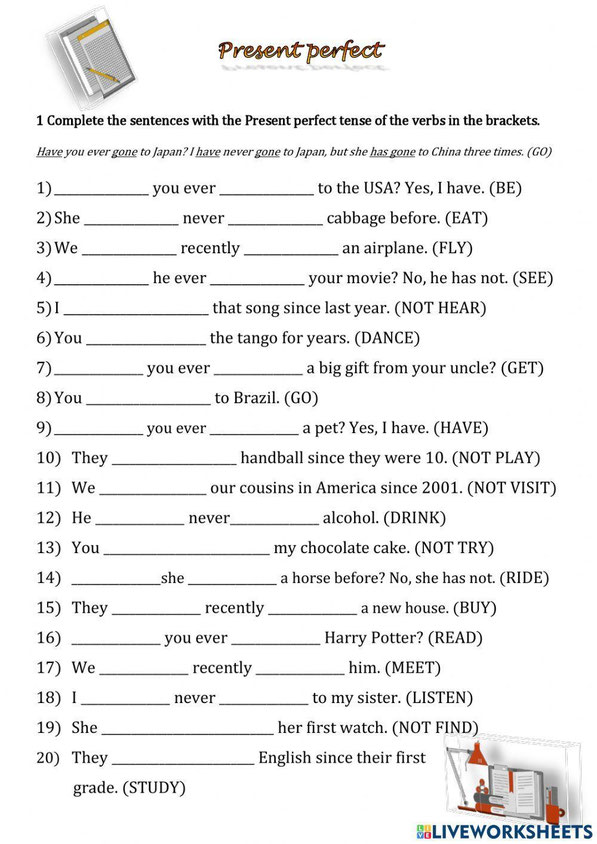
Present Perfect Exercise 1
Present perfect – Form
We form the present perfect tense with the verb have and the past participle of the verb. The past participle is the same as the past simple (-ed) for regular verbs. For irregular verbs, it’s the form in the 3rd column.

Download full-size image from Pinterest
Present perfect – Use
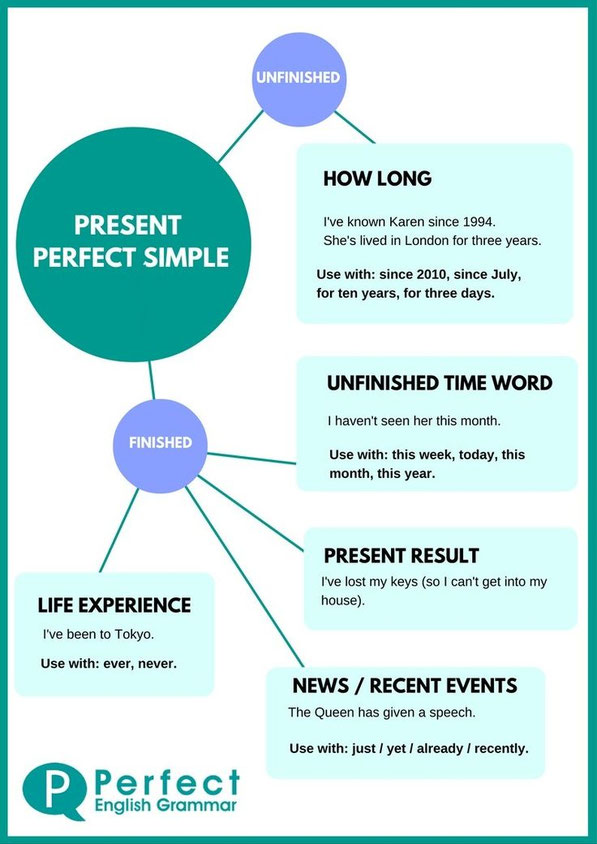
We normally use the present perfect to talk about past events that have a connection with the present, for example, news or past experiences. We can also use the present perfect to talk about situations that started in the past but which are still true in the present. Check the grammar chart below:

Download full-size image from Pinterest
Recent events and news
We use the present perfect to talk about recent events or news. We don’t say when these events happened.
- I’ve passed the test!
- She’s broken her arm.
- The president has travelled to Cuba.
⇒ Just, yet, already
We often use the present perfect with the words just, yet, already.
We use just in (+) sentences to say that something happened very recently (like minutes ago).
- I’ve just seen Peter in the street.
- He looks happy because he’s just got married.
We use yet in (-) and (?) sentences. We put it at the end of the sentence.
- Have you washed the dishes yet?
- I haven’t called him yet.
- She hasn’t arrived yet.
We use already in (+) sentences to say that something happened before now (usually earlier than we expected).
- I have already finished.
- We have already arrived.
Life experiences
We often use the present perfect to talk about past experiences in our lives. We don’t say when these experiences happened.
- I’ve run the Boston Marathon twice.
- She’s never been on a cruise.
- I’ve been here before.
⇒ Never, ever, before
When we ask about someone’s life experiences, we often use the word ever.
- Have you ever read this book?
- Have you ever been to India?
When we talk about life experiences, we often use the words never or before.
- She has never been late.
- I think I have seen this film before.
Unfinished actions
⇒ How long, for, since
We use the present perfect with the words how long, for, since to talk about actions or situations that started in the past and still continue or are still true now.
- I’ve lived in Oslo since I was born. (=I was born in Oslo and I still live in Oslo)
- They have been married for 25 years. (=They got married 25 years ago and they are still married)
We use how long in questions to ask about the duration of an action or situation.
- How long has she been a teacher?
- How long has she had her car?
We use for + a period of time, e.g. for two weeks, for ten years, for ten days, for a few hours, etc.
- We’ve been here for a few hours.
- They’ve been married for 10 years.
We use since + a moment in the past (the beginning of a period of time), e.g. since I was born, since 10 o’clock, since last Wednesday, etc.
- We’ve been here since 4 o’clock.
- They’ve been married since 2010.
Be careful with these common mistakes!
We use the present perfect, and not the present simple for actions or situations that started in the past and are still true now.
-
We are friends since first grade.

-
We’ve been friends since first grade.

We use for… and NOT since…ago to introduce a period of time.
-
They’ve been married since 10 years ago.
-
They’ve been married for 10 years.
Source: https://test-english.com/grammar-points/a2/present-perfect/
Exercises
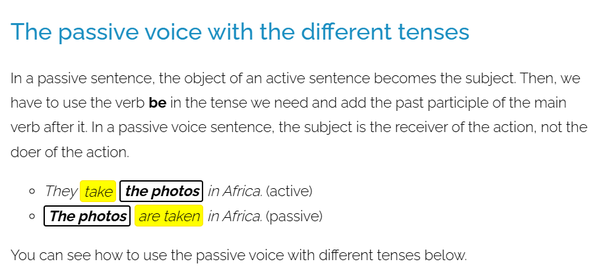
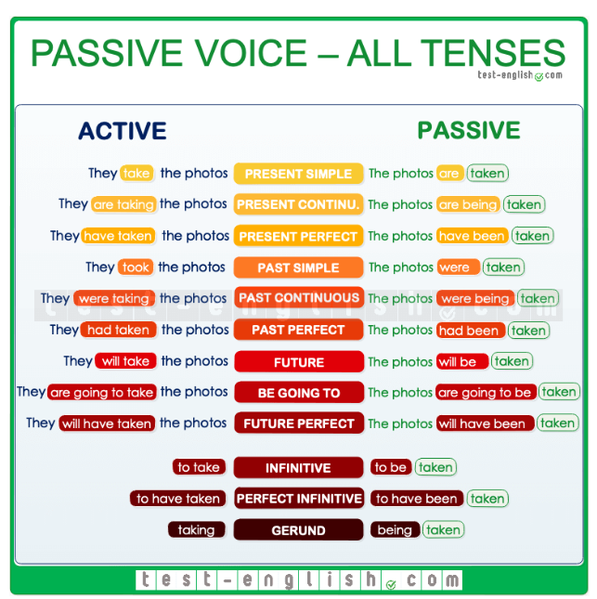
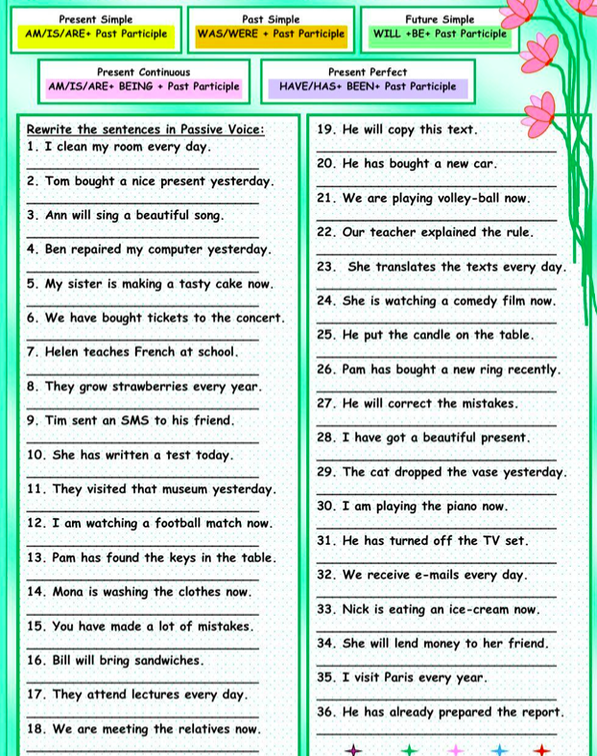
Passive Voice
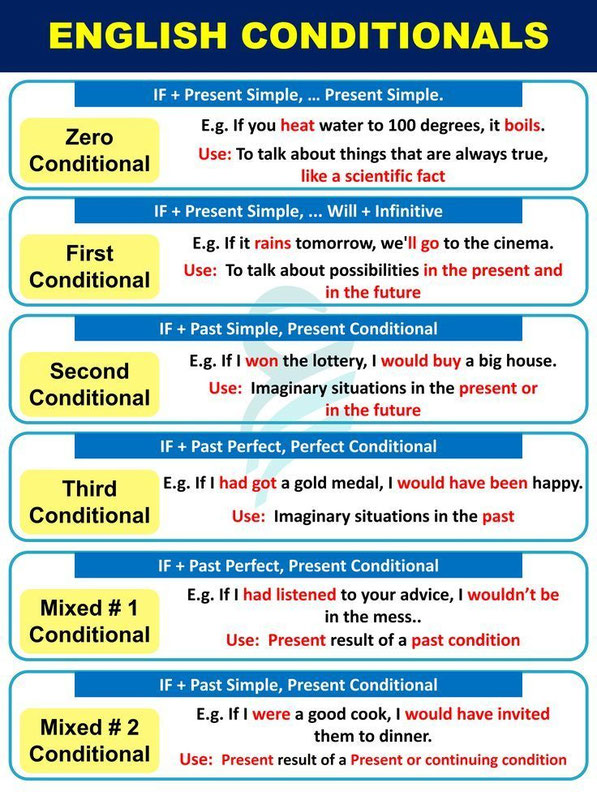
THE ZERO CONDITIONAL
Make the zero conditional.
|
1) If I
|
|
|
2) If my husband
|
|
|
3) If Julie
|
|
|
4) If children
|
|
|
5) If you
|
|
|
6) If people
|
|
|
7) If you
|
|
|
8) If children
|
|
|
9) If you
|
|
|
10) If I
|
|
|
11) I
|
|
|
12) Lots of people
|
|
|
13) She
|
|
|
14) My daughter
|
|
|
15) David
|
|
|
16) The river
|
|
|
17) I
|
|
|
18) I
|
|
|
19) My flatmate
|
|
|
20) Everybody
|
The First Conditional
First Conditional Form
Make the first conditional.
|
1) If I
|
|
|
2) If you
|
|
|
3) If we
|
|
|
4) If he
|
|
|
5) If we
|
|
|
6) If we
|
|
|
7) If the weather
|
|
|
8) If I
|
|
|
9) If we
|
|
|
10) If you
|
|
|
11) I
|
|
|
12) They
|
|
|
13) She
|
|
|
14) He
|
|
|
15) I
|
|
|
16) She
|
|
|
17) They
|
|
|
18) We
|
|
|
19) She
|
|
|
20) I
|
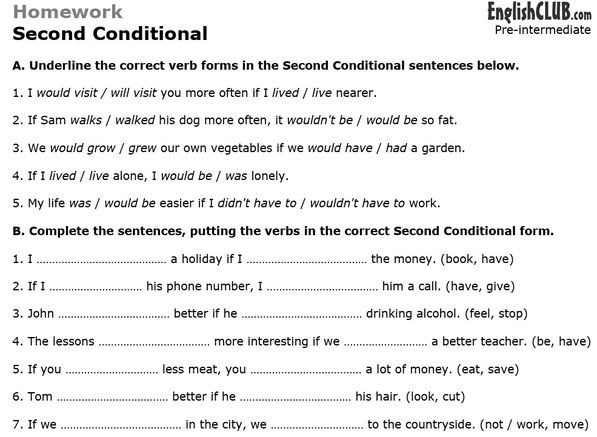
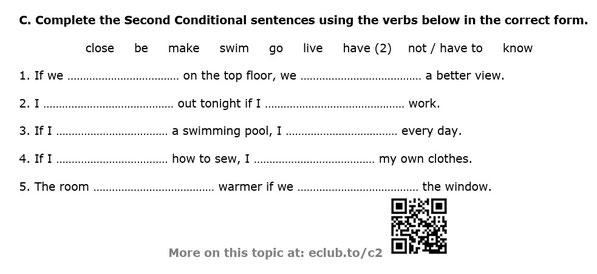
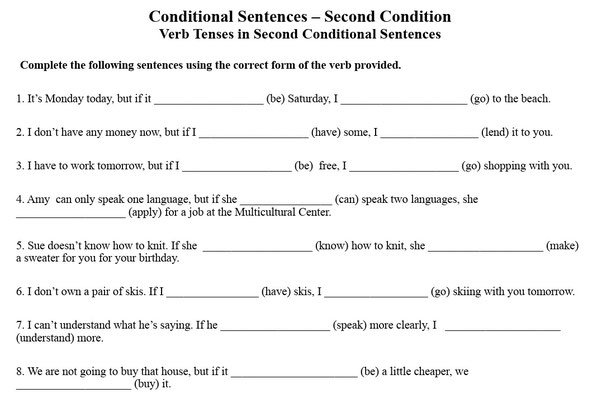
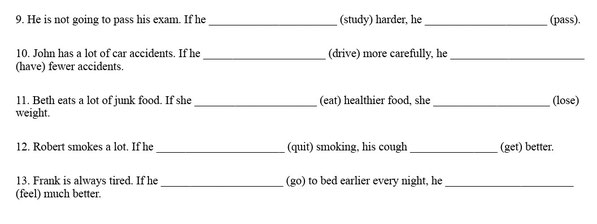
The Second Conditional
Second Conditional Form
Make the second conditional.
|
1) If I
|
|
|
2) If he
|
|
|
3) If we
|
|
|
4) If I
|
|
|
5) If she
|
|
|
6) If we
|
|
|
7) If you
|
|
|
8) If I
|
|
|
9) If we
|
|
|
10) If she
|
|
|
11) She
|
|
|
12) We
|
|
|
13) They
|
|
|
14) We
|
|
|
15) She
|
|
|
16) They
|
|
|
17) She
|
|
|
18) I
|
|
|
19) We
|
|
|
20) You
|
|
|
21) If I
|
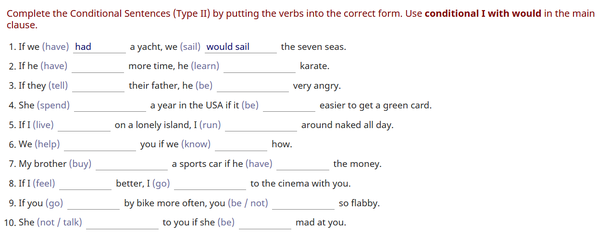
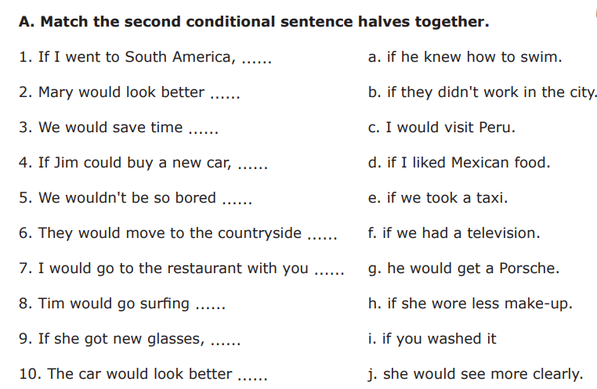
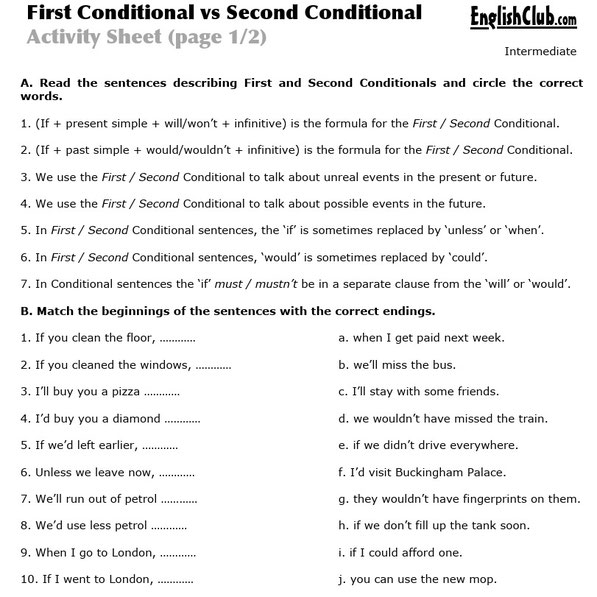
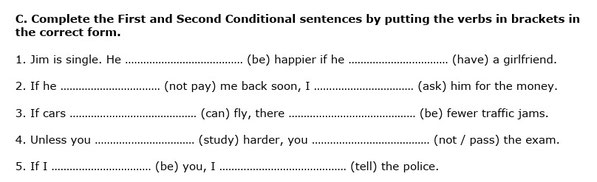
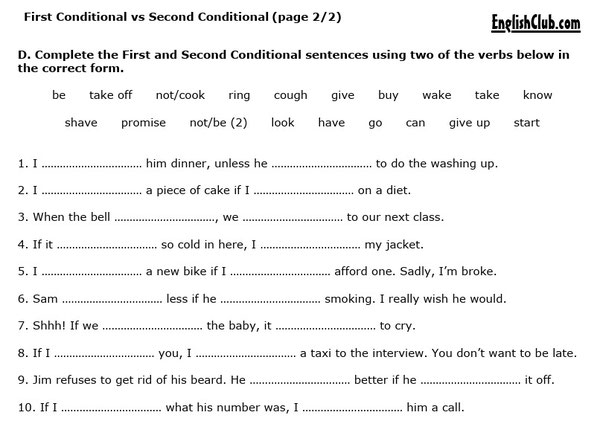
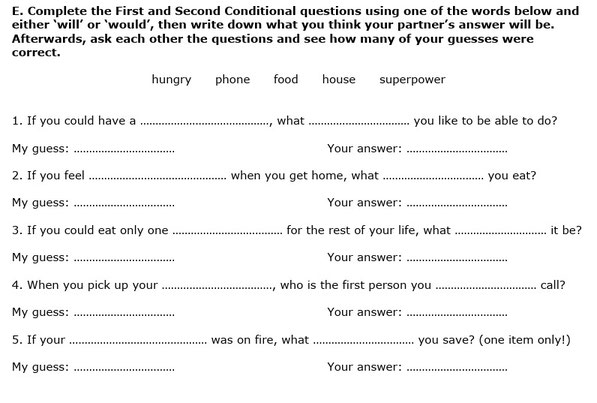
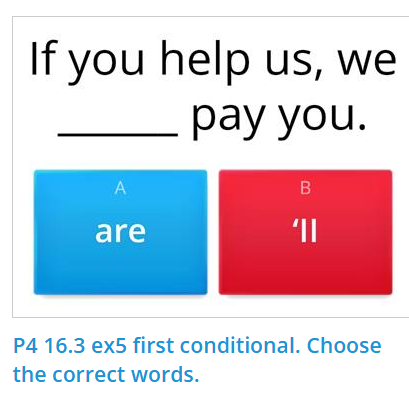
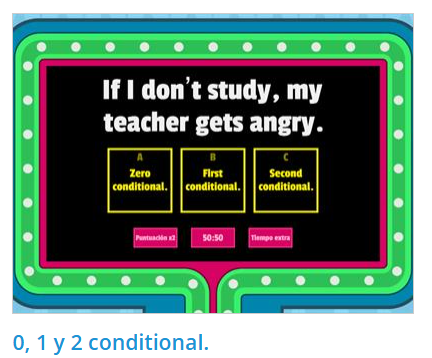
CONDITIONALS - GAMES
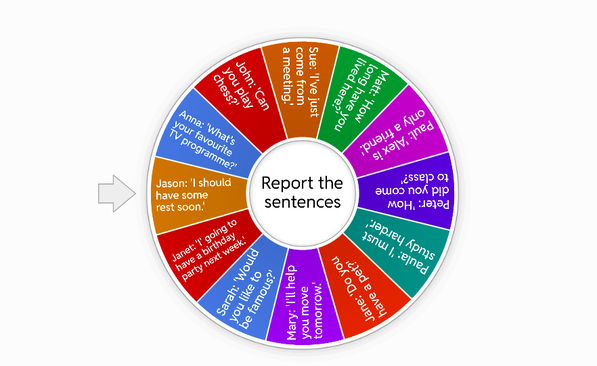
Reported Speech
What is indirect speech or reported speech?
When we tell people what another person said or thought, we often use reported speech or indirect speech. To do that, we need to change verb tenses (present, past, etc.) and pronouns (I, you, my, your, etc.) if the time and speaker are different. For example, present tenses become past, I becomes he or she, and my becomes his or her, etc.
- Sally: ‘I don’t have time.’ ⇒ Sally said that she didn’t have time.
- Peter: ‘I am tired .’ ⇒ He said that he was tired.
Omission of that
We often leave out that after reporting verbs like say, think, etc.
- She said she was late. (=She said that she was late.)
- I thought I would get the job.
Say or tell?
The most common verbs we use in reported speech are say and tell. We must pay attention here. We say tell somebody something and say something (to somebody).
-
They said me (that) they would help me.
-
They told me (that) they would help me.
-
He told (that) he didn’t have a car.
-
He said (that) he didn’t have a car.
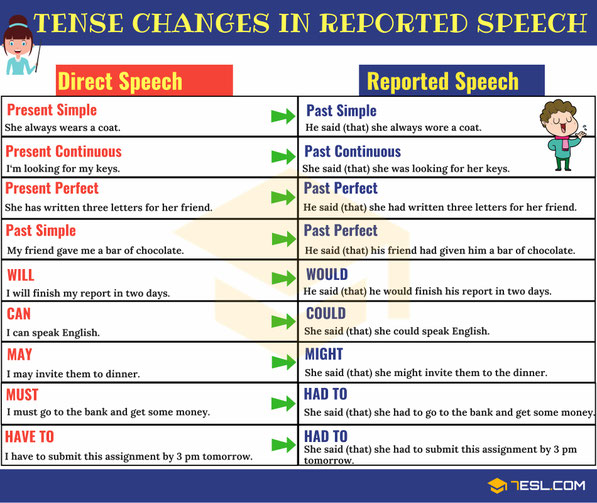
Tense changes in indirect speech

Download full-size image from Pinterest
When a person said something in the past, and now we tell somebody what that person said, the time is different, and for this reason, the verb tenses change. Look at a summary of these changes.
Changes in expressions

Download full-size image from Pinterest
There are adverbs or expressions of time and place that change when we report what someone says. Here you have a list.
Questions and imperatives in indirect speech

Download full-size image from Pinterest
We use the normal order of words in reported questions: subject + verb. We don’t use an auxiliary verb like do or did.
When we report an order or instruction, we use the form ask or tell someone to do something.
Pronoun changes in indirect speech
In reported or indirect speech, we must also pay attention to the use of pronouns. When a person tells us something, he or she uses the first person (I, me, my, we, us, our) to talk about himself or herself and the second person (you, your) to talk about us, the person listening. But when we tell someone else what that person said, we are going to use the third person (he, she, his, her, etc.) to talk about the speaker and the first person (I, me, my) to talk about ourselves, the listener.
- ‘I will help you.’ ⇒ He said that he would help me.
- ‘That’s my pen.’ ⇒ She said that it was her pen.
- ‘I need your help.’ ⇒ She said that she needed my help.
Exercise
Exercise 1
Choose the correct form to complete the sentences below.
Indirect speech – reported speech
Exercise 2
Choose the correct form for each gap below.
Page 2 of 2
Indirect speech – reported speech
Exercise 3
Turn these sentences into indirect speech.
Reported Speech Games
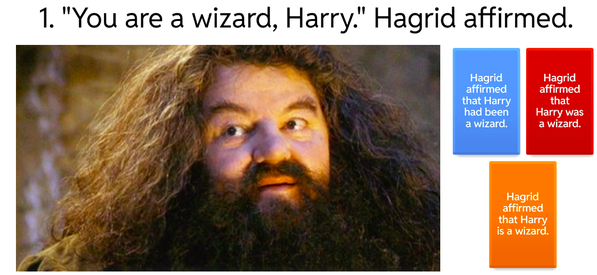
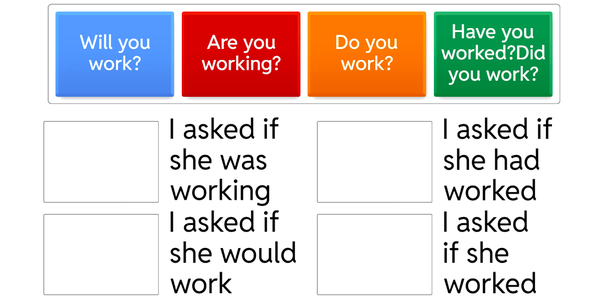
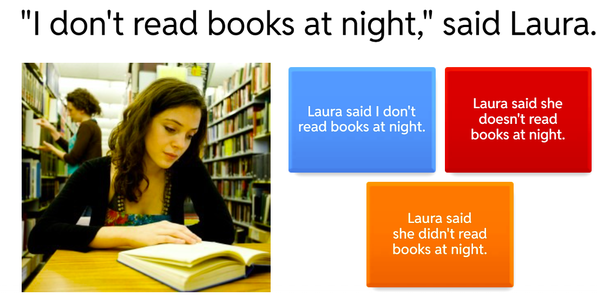
https://wordwall.net/es/resource/21843379/reported-speech-statements-questions-commands-and-requests